Beyond the Classroom
Beyond the Classroom
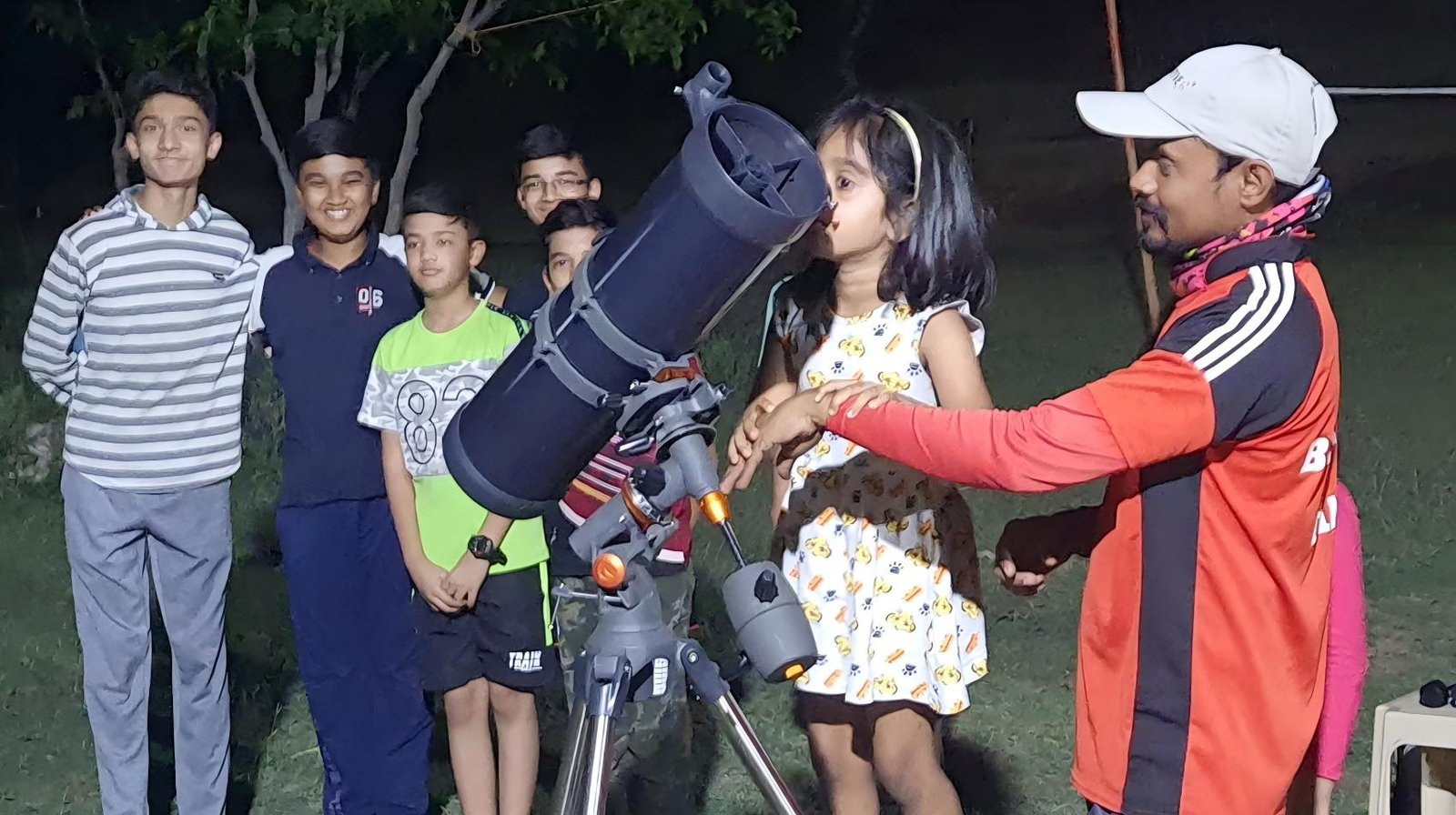
A classroom can be as large as the world around a child. The school gives children knowledge, but the world gives that knowledge meaning. A mountain can become a geography lesson, a forest a laboratory, a river a living example of the water cycle, and an open sky an invitation to observe, question and imagine.
Children are naturally curious. When a child looks outside the classroom window, perhaps we should not always see distraction; perhaps we should see curiosity looking for something to explore. Learning becomes deeper when children can connect what they read with what they experience.
Consider geography. Instead of only learning about the Amazon, the Nile or distant rivers, imagine asking a child, “Where does the rain falling on our school go? Which stream or river carries it? Can you trace its journey on a map until it reaches the sea?” Suddenly, drainage, tributaries, watersheds, maps and rivers become real. The syllabus becomes easier because the child has something meaningful to connect it to.
This is the philosophy behind Beyond the Classroom, a four-day structured experiential learning programme developed from more than four decades of experience in adventure, youth development and outdoor education. It is not an excursion and not simply an activity camp. The activities are the medium; the experience is the curriculum.
Across four days, students progressively discover and observe, face challenges, assume responsibility and leadership, and finally reflect and apply. Trekking, climbing, navigation, team challenges, nature exploration and other outdoor experiences are carefully used to develop observation, communication, cooperation, decision-making, resilience and confidence. What matters is not merely whether a student completes an activity, but what he or she discovers while doing it.
The process follows four essential faculties of learning: observe, retain, retrieve and present. Students experience something, remember it, reflect upon it and learn to express what they have understood. These habits eventually strengthen not only outdoor capability but also classroom learning and everyday decision-making.
Mission Shaurya showed what purposeful experiential learning can achieve. Fourteen school students climbed Mount Everest, but the real achievement was the preparation, discipline, teamwork, courage and self-belief developed along the journey. Every child does not need to climb Everest; every child, however, deserves an opportunity to discover his or her own potential.
Parents invest enormously in academic education. Give your child something that marks and textbooks alone cannot provide: the opportunity to experience, question, decide, cooperate, overcome and reflect.
Let your child step beyond the familiar classroom and discover a larger world of learning.
Beyond the Classroom — experience learning, discover yourself, and begin your journey towards the peak of your potential.